
INFANT WEANING
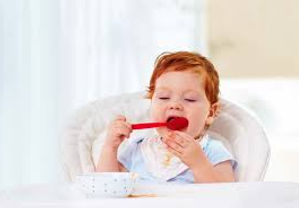
How do I know if my baby is ready?
-
Can stay in sitting position with the head steady
-
Eyes, hands and mouth coordinate together so your baby can look at the food, pick it up and put into his/her mouth
-
Swallow food, rather than spitting it out
Mummy & Daddy, I am not ready...
The following behaviors can be mistaken for signs of being ready for solid food:
-
chewing fist
-
wanting extra milk feeds
-
waking up in the middle of the night (more than usual)
These are normal baby behaviors and not necessarily signs of hunger. Try giving an extra bit of milk until they're really ready for food.
Try to soothe them-swaddling, swinging, humming/singing (yes, it does work!) to promote healthy self-regulation development


6-8 MONTHS
Start with small amounts of pureed/mashed foods.
Try starting with rice porridge/grains, followed by single vegetables and fruits.
Give lumpier and coarser textures (7-8 months) so that your baby's chewing and munching abilities improve.
Start with once a day first, gradually increase to
2-3x/day.

general principles
Continue breastfeeding with breast milk (or formula milk) as the main drink.
Include all the 6 main food groups.
Try to use fresh ingredients.
No:
-
Sugar & salt
-
Honey
-
Whole nuts
-
Raw shellfish
-
Unpasteurised milk